


If you’ve ever wondered how many scoops of protein powder should I take, you’re not alone. It’s one of the most common questions among beginners, gym-goers, and anyone looking to increase their protein intake. While most protein powders recommend one or two scoops per serving, the right amount depends on your body weight, activity level, fitness goals, and how much protein you already get from food.
In this guide, you’ll learn how many scoops of protein powder should I take based on your daily protein needs, whether one or two scoops is enough, and how to calculate the right serving size to support muscle growth, recovery, or weight management.
How Much Protein Is in One Scoop?
Most protein powders provide between 20 and 30 grams of protein per scoop, although some high-protein formulas contain more.
A typical scoop also contains:
- 100–150 calories
- 1–5 grams of carbohydrates
- 1–3 grams of fat
Always check your product’s nutrition label because serving sizes vary between brands.
Remember that a scoop is simply a measuring tool—it doesn’t determine how much protein your body actually needs.
Your Daily Protein Needs Matter More Than the Number of Scoops
Instead of asking how many scoops to take, ask:
“How much protein do I need today?”
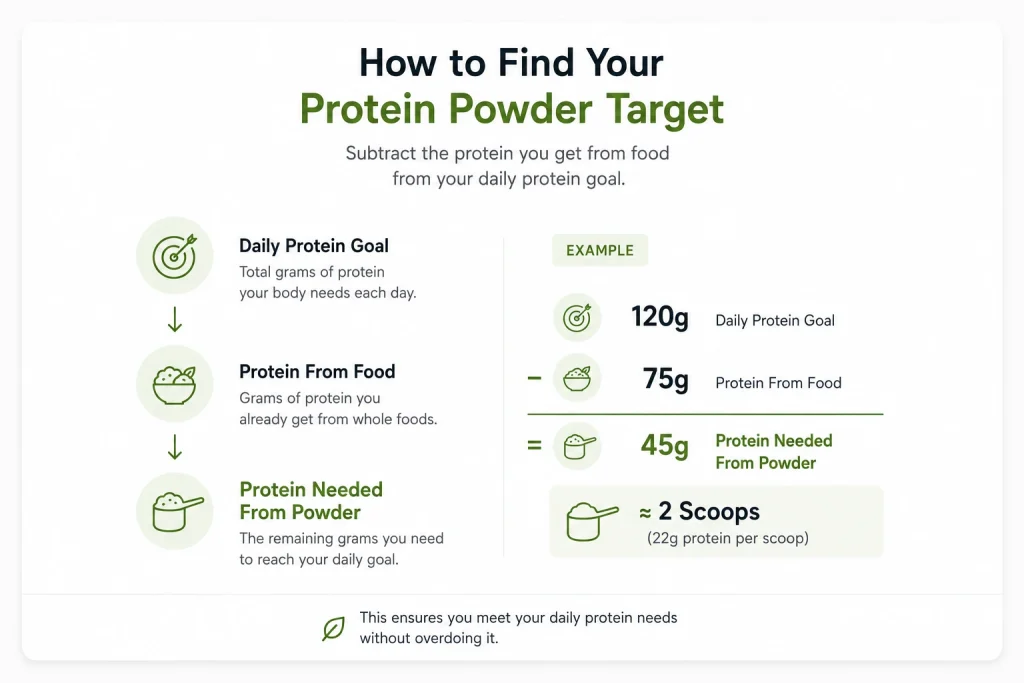
General recommendations include:
| Activity Level | Daily Protein |
|---|---|
| Sedentary adults | 0.8 g per kg of body weight |
| Recreational exercise | 1.0–1.2 g/kg |
| Strength training | 1.6–2.2 g/kg |
| Weight loss | 1.6–2.4 g/kg |
Example
Suppose you weigh 180 pounds (82 kg) and lift weights four times per week.
Your recommended intake would be approximately 130–180 grams of protein daily.
If your meals already provide 140 grams, a single 25-gram protein shake is enough to reach your goal. If you’re only getting 90 grams from food, two scoops spread throughout the day may be a better option.
While individual protein needs vary based on age, activity level, and fitness goals, research consistently shows that physically active individuals often benefit from consuming more protein than the minimum recommended dietary allowance. The International Society of Sports Nutrition (ISSN) recommends higher protein intakes to support muscle growth, recovery, and athletic performance. You can read the full position stand here: https://jissn.biomedcentral.com/articles/10.1186/s12970-017-0177-8
How Many Scoops of Protein Powder Should I Take if I’m a Beginner??
For many people, yes.
One scoop is often sufficient if you:
- Eat protein-rich meals throughout the day.
- Need a convenient post-workout snack.
- Want to increase your daily protein intake without adding many calories.
- Are maintaining your current weight.
Protein powder is designed to supplement your diet—not replace whole-food protein sources.
Can You Take Two Scoops of Protein?
Absolutely.
Two scoops may be appropriate if you:
- Are trying to build muscle.
- Train intensely several days per week.
- Have difficulty eating enough protein.
- Use protein shakes as part of a meal replacement.
However, taking two scoops at once isn’t necessarily better than dividing your protein intake across the day.
Research suggests that consuming protein every few hours supports muscle protein synthesis more effectively than eating most of your protein in one meal.
Is Three Scoops of Protein Too Much?
Usually, three scoops aren’t necessary for most people.
Depending on the product, three scoops may provide 60–90 grams of protein in one serving.
While healthy individuals can generally digest this amount, your body may use it more efficiently when protein is spread across multiple meals and snacks.
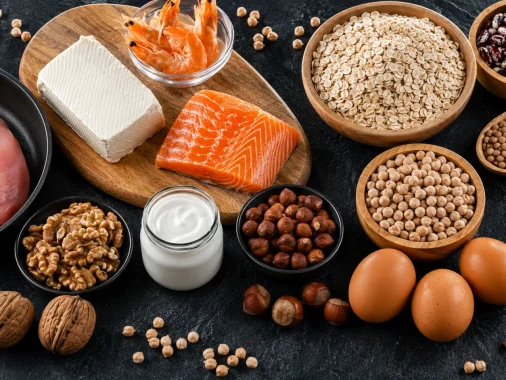
If you consistently rely on three or more scoops every day, consider increasing protein-rich foods such as:
- Chicken breast
- Turkey
- Fish
- Eggs
- Greek yogurt
- Cottage cheese
- Beans and lentils
Whole foods also provide vitamins, minerals, and other nutrients that protein powders don’t always contain.
Can Your Body Absorb More Than One Scoop?
A common myth is that your body can only absorb 20–30 grams of protein at one time.
In reality, your digestive system absorbs nearly all the protein you consume. The real question is how efficiently that protein is used for muscle building.
While very large servings may not maximize muscle protein synthesis, they still contribute to your daily protein intake and support other important functions throughout the body.
For most people, consuming 20–40 grams of protein per meal is a practical target.
Should You Take Protein Powder Every Day?
Yes, if it helps you meet your daily protein requirements.
Protein powder is simply a convenient source of dietary protein. Many athletes and active individuals use it every day because it’s portable, affordable, and easy to prepare.
That said, whole foods should still make up the majority of your diet whenever possible.
Common Mistakes to Avoid
Many people use protein powder incorrectly. Avoid these common mistakes:
- Taking protein without knowing your daily protein target.
- Assuming more scoops automatically build more muscle.
- Ignoring protein from meals when calculating your intake.
- Using protein powder instead of eating balanced meals.
- Forgetting that recovery, sleep, and resistance training are just as important as protein intake.
Protein powder is one part of a healthy fitness routine—not the entire solution.
Frequently Asked Questions
Is one scoop enough after a workout?
For most people, yes. One scoop typically provides enough protein to support post-workout recovery when combined with a balanced diet.
Can I drink two protein shakes a day?
Yes. Two shakes can be helpful if you’re struggling to meet your daily protein goal through food alone.
Should beginners take one or two scoops?
Most beginners only need one scoop per serving unless they have unusually high protein requirements.
Can you take protein powder on rest days?
Yes. Your muscles continue recovering on rest days, so meeting your daily protein goal remains important even when you’re not exercising.
Is it bad to take protein powder every day?
No. Daily protein powder use is generally safe for healthy adults when consumed as part of a balanced diet and within your overall protein needs.
Final Thoughts
For most adults, one scoop of protein powder is enough to supplement a healthy diet. If you’re highly active or have increased protein requirements, two scoops may be appropriate. Rather than focusing on the number of scoops, calculate your daily protein goal and use protein powder to fill any nutritional gaps.
By pairing protein supplements with whole foods, regular exercise, and adequate recovery, you’ll be in a much better position to support muscle growth, improve recovery, and meet your fitness goals.




Pingback: Best Time to Drink Protein Shakes (2026 Guide) - Nutra Insight