
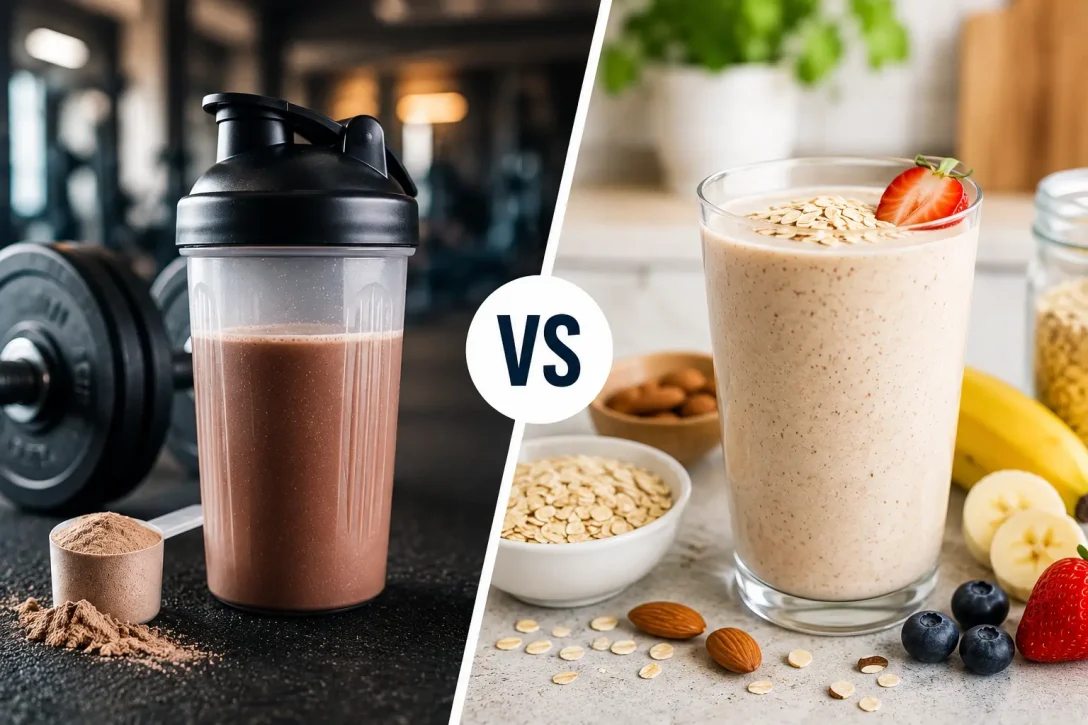

If you’ve ever walked through a nutrition store or browsed health products online, you’ve likely come across both protein shakes and meal replacement shakes. While they may appear similar at first glance, these products are designed for different purposes and can play very different roles in a healthy lifestyle.
Understanding the difference between a protein shake and a meal replacement shake can help you make better nutrition decisions based on your goals, whether that’s weight management, muscle building, convenience, or overall wellness.
In this guide, we’ll explore the key differences, benefits, drawbacks, and how to choose the option that best fits your needs.
What Is a Protein Shake?
A protein shake is a beverage designed primarily to increase protein intake. Most protein shakes are made by mixing protein powder with water, milk, or a plant-based alternative.
Protein shakes are commonly used by:
- Athletes
- Fitness enthusiasts
- Individuals looking to increase daily protein intake
- People recovering from exercise
The main purpose of a protein shake is to provide a concentrated source of protein that supports muscle repair, recovery, and maintenance.
Common Ingredients Found in Protein Shakes
Protein shakes typically contain:
- Whey protein
- Casein protein
- Soy protein
- Pea protein
- Rice protein
- Water or milk
- Flavorings and sweeteners
Some products may also include vitamins, minerals, digestive enzymes, or amino acids, but protein remains the primary focus.
Benefits of Protein Shakes
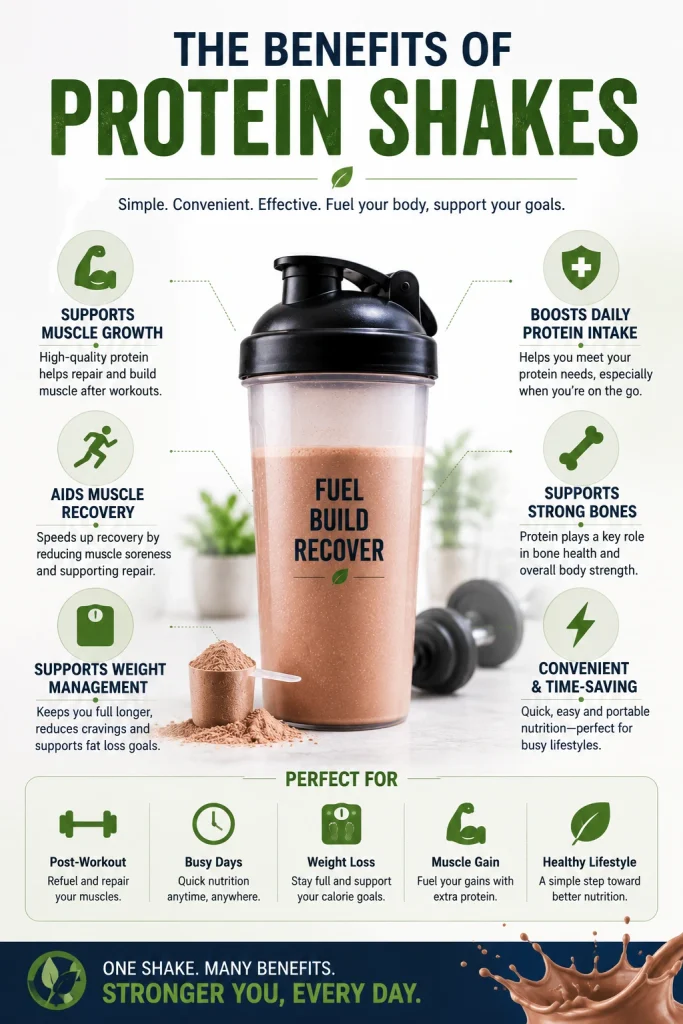
Protein shakes offer several advantages:
Limitations of Protein Shakes
Despite their benefits, protein shakes are not designed to replace complete meals.
Many contain:
- Limited carbohydrates
- Minimal healthy fats
- Little fiber
- Few micronutrients
For this reason, a standard protein shake is generally considered a supplement rather than a meal.
What Is a Meal Replacement Shake?
A meal replacement shake is designed to replace an entire meal by providing a balanced combination of macronutrients and micronutrients.
Unlike protein shakes, meal replacement shakes aim to provide nutrition similar to what you might obtain from a balanced breakfast or lunch.
Typical Components of Meal Replacement Shakes
Most meal replacement shakes contain:
- Protein
- Carbohydrates
- Healthy fats
- Fiber
- Vitamins
- Minerals
The goal is to deliver balanced nutrition in a convenient format.
Benefits of Meal Replacement Shakes
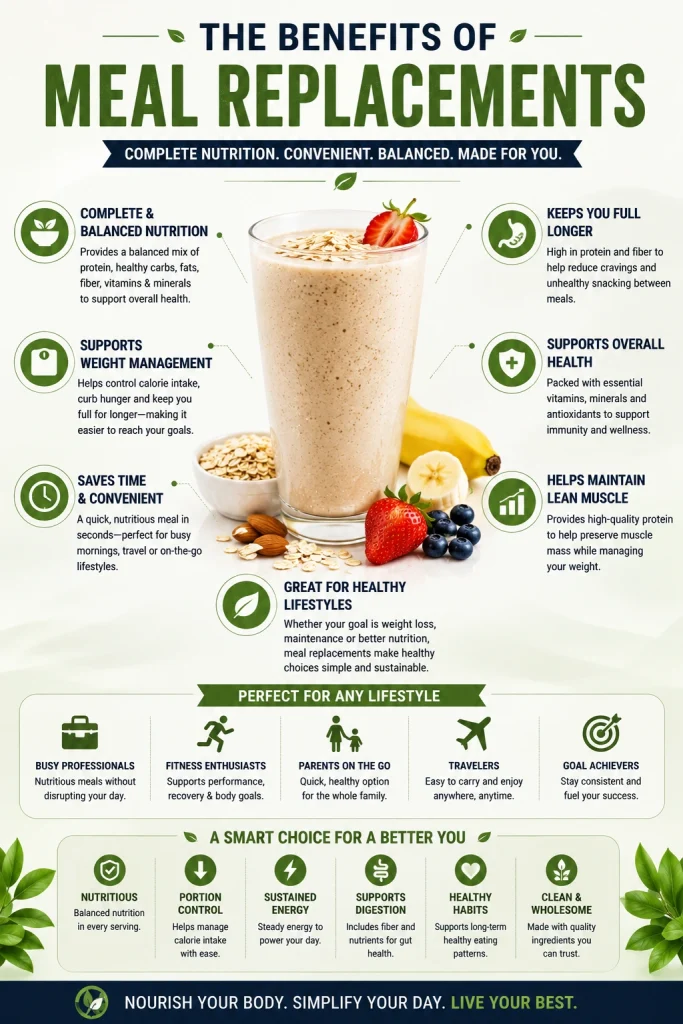
Convenience
Meal replacement shakes are useful when preparing or consuming a traditional meal is not practical.
Portion Control
Many products are pre-portioned, making it easier to manage calorie intake.
Balanced Nutrition
Unlike standard protein shakes, meal replacement shakes often contain a wider range of nutrients.
Supports Weight Management
Some individuals use meal replacement shakes as part of a structured nutrition plan to support healthy weight management goals.
Limitations of Meal Replacement Shakes
Meal replacement shakes should not completely replace whole foods over the long term.
Whole foods provide:
- Greater dietary variety
- Different textures
- Natural sources of nutrients
- Additional phytonutrients and antioxidants
Meal replacement products are best viewed as a tool that complements a healthy diet.
Protein Shake vs Meal Replacement Shake: Key Differences
| Feature | Protein Shake | Meal Replacement Shake |
|---|---|---|
| Main Purpose | Increase protein intake | Replace a complete meal |
| Calories | Lower | Higher |
| Protein | High | Moderate to high |
| Carbohydrates | Often low | Balanced |
| Healthy Fats | Minimal | Included |
| Fiber | Limited | Usually included |
| Vitamins & Minerals | Variable | Usually fortified |
| Intended Use | Supplement | Meal replacement |
Nutritional Comparison
Although products vary by brand, the following example illustrates typical differences.
| Nutrient | Protein Shake | Meal Replacement Shake |
|---|---|---|
| Calories | 100-200 | 200-400 |
| Protein | 20-30g | 15-25g |
| Carbohydrates | 2-15g | 20-40g |
| Fat | 1-5g | 5-15g |
| Fiber | 0-5g | 3-10g |
| Vitamins & Minerals | Limited | Extensive |
These differences reflect their intended purposes.
Which Is Better for Weight Loss?
Many people exploring nutrition products want to know which option is better for weight loss.
The answer depends on how the product is used.
Protein Shakes and Weight Loss
Protein shakes may support weight loss by:
- Increasing fullness
- Helping preserve muscle mass during calorie reduction
- Reducing hunger between meals
However, protein shakes alone do not automatically lead to weight loss.
Meal Replacement Shakes and Weight Loss
Meal replacement shakes can be useful because they provide:
- Controlled calorie portions
- Balanced nutrition
- Convenience
- Simplicity
For some individuals, replacing a high-calorie meal with a nutritionally balanced shake can support a calorie deficit.
Ultimately, sustainable weight management depends on overall eating habits, activity levels, and lifestyle choices.
Which Is Better for Muscle Building?
For individuals focused on muscle growth and exercise performance, protein shakes generally have the advantage.
This is because they typically contain:
- Higher protein levels
- More essential amino acids
- Faster digestion in some formulations
Meal replacement shakes can still contribute to muscle growth but are not specifically designed for that purpose.
Can a Protein Shake Replace a Meal?
A common misconception is that any protein shake can function as a meal replacement.
In reality, most protein shakes lack:
- Adequate calories
- Fiber
- Healthy fats
- Comprehensive micronutrients
However, you can create a more balanced shake by adding:
- Oats
- Greek yogurt
- Nut butter
- Fruit
- Chia seeds
- Flaxseeds
These additions help create a more complete nutritional profile.
Common Mistakes People Make
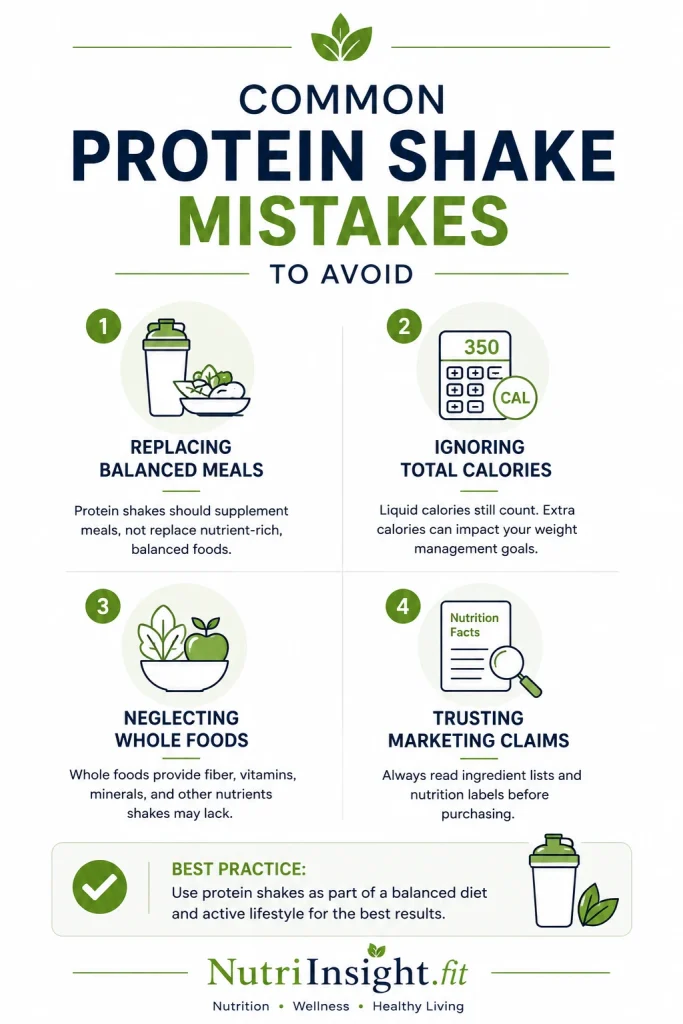
Who Can Benefit From Protein Shakes and Meal Replacement Shakes?
| Scenario | How Protein Shakes or Meal Replacements May Help |
|---|---|
| Busy Professionals | Convenient nutrition when preparing a balanced meal is not practical. |
| Fitness Enthusiasts | Helps increase protein intake and support post-workout recovery. |
| Students | Quick and portable option during busy study schedules. |
| Weight Management | Can assist with portion control and structured meal planning. |
| Frequent Travelers | Useful when healthy food options are limited while traveling. |
Frequently Asked Questions
Are meal replacement shakes healthier than protein shakes?
Neither is inherently healthier. Protein shakes and meal replacement shakes serve different purposes and can fit into a healthy diet when used appropriately.
Can I drink a meal replacement shake every day?
Many people use meal replacement shakes daily. However, whole foods should remain the foundation of a balanced and varied diet.
Is whey protein a meal replacement?
No. Whey protein is a source of protein and typically does not provide the carbohydrates, healthy fats, fiber, vitamins, and minerals found in a meal replacement shake.
Can I use a protein shake for breakfast?
Yes. A protein shake can be used for breakfast, especially when combined with ingredients such as fruit, oats, yogurt, or healthy fats to create a more balanced meal.
Which option keeps you fuller for longer?
Meal replacement shakes often provide greater satiety because they contain a balance of protein, carbohydrates, healthy fats, and fiber.
Can protein shakes help with weight loss?
Protein shakes may support weight loss by increasing feelings of fullness and helping maintain muscle mass when combined with a healthy diet and regular physical activity.
Who should use meal replacement shakes?
Meal replacement shakes may be helpful for busy individuals, travelers, students, or anyone looking for a convenient way to consume balanced nutrition when a traditional meal is not available.
Final Thoughts
Protein shakes and meal replacement shakes may look similar, but they are designed for different purposes. Protein shakes focus on increasing protein intake and supporting muscle recovery, while meal replacement shakes are formulated to provide balanced nutrition when replacing a meal.
Choosing the right option depends on your individual goals, lifestyle, and nutritional needs. By understanding the differences, you can make informed decisions that support long-term health, wellness, and fitness success.




Pingback: High Protein Breakfast Ideas: 10 Healthy Options -
Pingback: Best Protein Shake for Weight Loss: A Complete Guide -
Pingback: How to Mix Protein Powder for Smooth Protein Shakes - Nutra Insight
Pingback: The Foundation of Protein Nutrition: The Complete Guide (2026) - Nutra Insight