
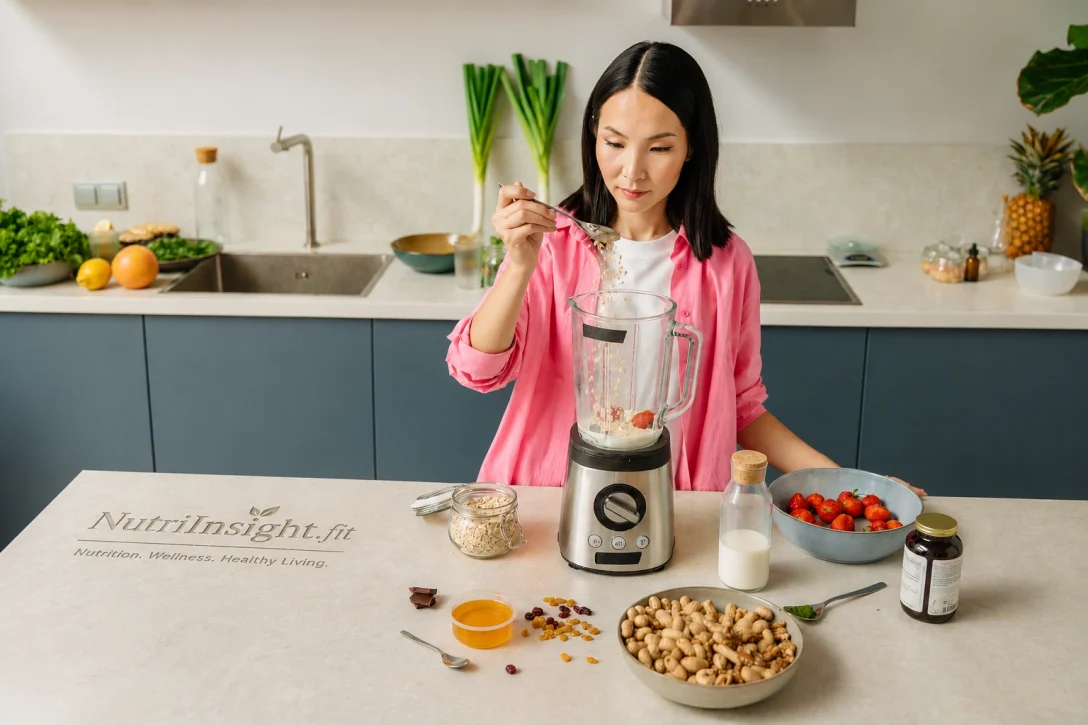

Protein powder is one of the most convenient ways to increase your daily protein intake. Whether your goal is weight loss, muscle recovery, meal replacement, or simply improving your nutrition, knowing how to mix protein powder correctly can make a significant difference in both taste and texture.
Many people struggle with clumpy shakes, powder sticking to the bottom of the bottle, or unpleasant flavors that make it difficult to enjoy their daily protein intake. Fortunately, a few simple techniques can help you create smooth, delicious protein shakes every time.
In this guide, you’ll learn exactly how to mix protein powder, the best liquids to use, common mistakes to avoid, and practical tips for getting the best results.
If you’re looking for practical ways to use protein shakes as part of a healthy lifestyle, see our guide on High Protein Breakfast Ideas.
Why Properly Mixing Protein Powder Matters
Mixing protein powder may seem simple, but poor mixing can affect the overall experience.
When protein powder isn’t mixed properly, you may experience:
- Lumps and clumps
- Uneven texture
- Powder settling at the bottom
- Poor flavor distribution
- Wasted product
A properly mixed protein shake is smoother, easier to drink, and more enjoyable. According to the Academy of Nutrition and Dietetics, adequate protein intake plays an important role in maintaining muscle health and supporting overall wellness.
What You Need to Mix Protein Powder
Before making your shake, gather the following:
- Protein powder
- Water, milk, or plant-based milk
- Shaker bottle, blender, or mixing cup
- Measuring scoop
- Ice cubes (optional)
The method you choose depends on the type of shake you want to make.
Best Liquids When Learning How to Mix Protein Powder
The liquid you choose can significantly impact taste, texture, calories, and nutritional value.
Water
Water is the simplest option.
Benefits include:
- Zero calories
- Quick absorption
- Light texture
- Ideal for post-workout recovery
However, water may produce a thinner shake compared to milk.
Dairy Milk
Dairy milk creates a richer, creamier texture.
Benefits include:
- Additional protein
- Better flavor
- Increased satiety
- Added vitamins and minerals
Whole milk contains more calories, while skim milk offers fewer calories.
Plant-Based Milk
Popular options include:
- Almond milk
- Soy milk
- Oat milk
- Coconut milk
Plant-based milks can provide a creamy texture while accommodating dietary preferences.
How to Mix Protein Powder in a Shaker Bottle
A shaker bottle is one of the easiest and most convenient methods.
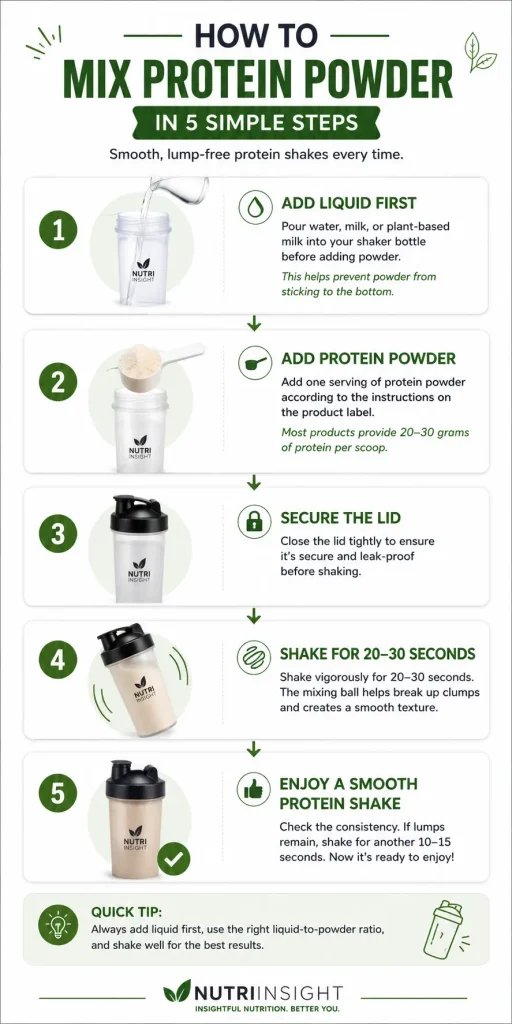
Step 1: Add Liquid First
Always pour the liquid into the shaker before adding the powder.
This helps prevent protein powder from sticking to the bottom.
Step 2: Add Protein Powder
Use the serving size recommended on the product label.
Most products contain approximately:
- 20–30 grams of protein per scoop
Step 3: Secure the Lid
Ensure the lid is tightly closed before shaking.
Step 4: Shake Thoroughly
Shake vigorously for 20–30 seconds.
The mixing ball inside the shaker helps break up clumps and improve consistency.
Step 5: Check Consistency
If lumps remain, shake for another 10–15 seconds.
Your shake should appear smooth and evenly blended.
How to Mix Protein Powder Using a Blender
A blender is ideal when you want a thicker, more nutritious shake.
Basic Blender Recipe
Combine:
- 1 scoop protein powder
- 250–350 ml liquid
- Ice cubes
Blend for 20–30 seconds.
Add Healthy Ingredients
You can increase flavor and nutritional value by adding:
- Banana
- Berries
- Greek yogurt
- Peanut butter
- Oats
- Spinach
- Chia seeds
This creates a more satisfying meal or snack.
How to Mix Protein Powder Without a Shaker
Not everyone owns a shaker bottle.
Alternative methods include:
Using a Spoon
Add liquid first, then slowly stir the powder.
This method works but may leave some lumps.
Using a Fork
A fork can help break up clumps more effectively than a spoon.
Using a Mason Jar
A tightly sealed mason jar can work similarly to a shaker bottle.
Shake vigorously for 30 seconds.
Common Mistakes When Learning How to Mix Protein Powder
Adding Powder First
Many beginners make this mistake.
Protein powder can stick to the bottom of the container and become difficult to dissolve.
Using Too Little Liquid
Insufficient liquid often results in a thick, chalky texture.
Follow the manufacturer’s recommended liquid-to-powder ratio.
Not Shaking Long Enough
Many lumps occur simply because the shake wasn’t mixed long enough.
Using Hot Liquids
Heat can affect texture and cause certain protein powders to clump.
Warm liquids are generally acceptable, but very hot liquids should be avoided.
Ignoring Product Instructions
Different protein powders have different formulations.
Always check the label recommendations.
How Much Liquid Should You Use to Mix Protein Powder?
The ideal amount depends on personal preference.
Thicker Shake
Use:
- 200–250 ml liquid
Medium Consistency
Use:
- 250–350 ml liquid
Thinner Shake
Use:
- 350–500 ml liquid
Experiment until you find the texture you enjoy most.
Best Time to Drink a Protein Shake
Protein shakes can be consumed at various times throughout the day.
Popular options include:
After Exercise
Many people drink protein shakes following workouts to support muscle recovery.
Breakfast
Protein shakes can be a quick breakfast solution on busy mornings.
For more breakfast ideas, see our guide on High Protein Breakfast Ideas.
Between Meals
Protein shakes may help manage hunger between meals.
As a Meal Replacement
Some individuals use protein shakes as part of a weight management plan. The Harvard T.H. Chan School of Public Health Nutrition Source notes that protein can help promote satiety and support healthy eating patterns when included as part of a balanced diet.
Learn more in our guide on Protein Shake vs Meal Replacement Shake.
How to Improve the Taste of Protein Shakes
If you’re struggling with flavor, try:
- Adding fruit
- Using flavored protein powder
- Blending with ice
- Mixing with milk instead of water
- Adding cinnamon
- Using unsweetened cocoa powder
- Incorporating nut butter
These simple additions can significantly improve taste.
Protein Powder Storage Tips
To maintain freshness:
- Store in a cool, dry place
- Keep the container tightly sealed
- Avoid exposure to moisture
- Follow expiration dates
Proper storage helps preserve flavor and quality.
Frequently Asked Questions
Can I mix protein powder the night before?
Yes. Store the shake in a refrigerator and shake again before drinking.
Why is my protein powder clumpy?
Common causes include insufficient shaking, adding powder before liquid, or exposure to moisture.
Can I mix protein powder with coffee?
Yes. Many people enjoy mixing protein powder with cooled coffee for a high-protein beverage.
Is a blender better than a shaker bottle?
A blender generally produces a smoother texture, while a shaker bottle offers convenience and portability.
Can I learn mix protein powder with just water?
Absolutely. Water is one of the most popular options and is ideal for a lower-calorie shake.
Final Thoughts
Learning how to mix protein powder properly can dramatically improve your experience with protein supplements. By adding liquid first, using the correct ratio, and choosing the right mixing method, you can enjoy smooth, lump-free shakes every time.
Whether you’re trying to lose weight, support muscle recovery, or increase your daily protein intake, a properly prepared protein shake is a convenient and effective addition to a healthy lifestyle.
Start with a simple recipe, experiment with different ingredients, and find the combination that works best for your goals and preferences.

Pingback: Whey Protein vs Plant Protein: Which Is Better?(2026 Guide) - Nutra Insight