


Turning 40 is a remarkable milestone. It brings a profound sense of self-awareness, confidence, and wisdom that you simply cannot replicate in your twenties or thirties. However, alongside this newfound mental clarity, it also ushers in a series of subtle—and sometimes not-so-subtle—physiological changes. You might notice that your energy dips a little earlier in the afternoon, recovering from a tough workout takes a bit longer, or your sleep isn’t quite as deep as it used to be.
Welcome to a new transitional phase of your biology. To support this exciting chapter, finding the right multivitamin for women over 40 becomes more than just a passing wellness trend; it is a fundamental pillar of proactive self-care.
While a colorful, balanced diet should always be your primary source of nutrition, the reality of modern agriculture, soil depletion, and busy lifestyles means that nutritional gaps are incredibly common. Today, we will explore why women’s health supplements are essential, the specific multivitamin benefits you should look out for, and how to expertly navigate the saturated market to find the ideal formula for your unique body.
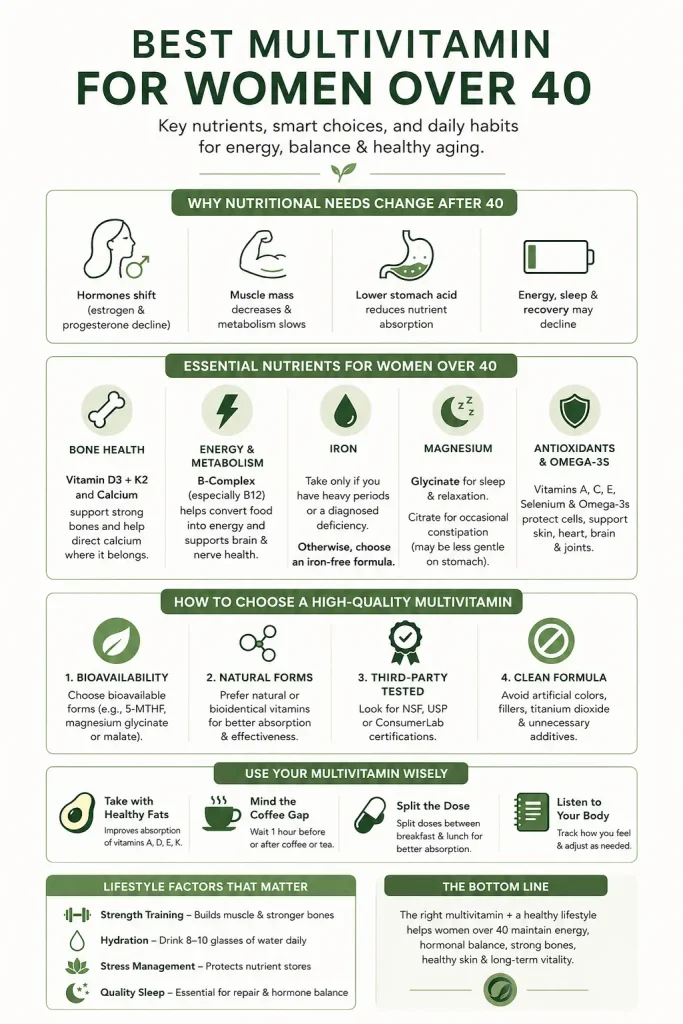
Why Your Nutritional Needs Change After 40
Once you cross the four-decade mark, your biological landscape begins to shift. Estrogen and progesterone levels start their gradual, sometimes unpredictable, decline. This phase, often the runway to menopause, demands that you pay close attention to the specific nutritional needs for perimenopause.
One of the most noticeable shifts is the impact of supplements on metabolism after 40. As muscle mass naturally decreases (a process known as sarcopenia) and hormonal profiles fluctuate, your resting metabolic rate often slows down. Since muscle mass naturally declines with age, increasing your daily protein intake becomes just as important as taking the right vitamins. Learn more in our Complete Guide to Protein Nutrition.
You can no longer eat or supplement exactly the way you did in your twenties and expect the same results. Furthermore, as you age, your digestive system naturally produces slightly less stomach acid and digestive enzymes, making your body less efficient at extracting and absorbing certain nutrients from food alone.
Understanding the daily nutrient requirements for premenopausal women is critical here. It’s no longer just about preventing baseline deficiencies; it’s about managing hormonal changes with micronutrients. Providing your body with the exact cellular building blocks it needs can alleviate mood swings, support DNA repair, and keep your internal engine running smoothly through every hormonal fluctuation.
Decoding the Essential Vitamins and Minerals for Your 40s
When shopping for a multivitamin for women over 40 , it is vital to know exactly which ingredients deserve a spot on the label. Not every mineral is necessary, and some require specific pairings to work correctly. Let’s break down the essential micronutrients for healthy aging.
Bone Defense: Calcium and Vitamin D
Bone density peaks in your late twenties. By the time you reach your forties, the natural process of bone breakdown slowly begins to outpace bone formation—a dynamic accelerated by dropping estrogen levels. Therefore, ensuring adequate calcium and vitamin D for bone density is absolutely non-negotiable.
- Vitamin D3: Think of Vitamin D as the key that unlocks the door for calcium to enter your bloodstream. Without it, your calcium supplement is virtually useless.
- Calcium: Look for a multivitamin that offers a moderate amount of calcium, or consider taking it separately. Calcium can inhibit the absorption of other minerals like iron and zinc if taken in massive doses simultaneously.
- Vitamin K2: Often paired with D3, K2 is the traffic cop of your vascular system. It directs calcium into your bones and teeth rather than letting it dangerously calcify in your arteries.
Reclaiming Your Vigor: B-Vitamins
If you are constantly searching for the best vitamins for energy after 40, look no further than the B-complex family. B-vitamins are the metabolic spark plugs of your body, responsible for converting the carbohydrates, fats, and proteins you eat into usable cellular energy (ATP).
As mentioned earlier, decreasing stomach acid makes it progressively harder to extract Vitamin B12 from animal proteins. The symptoms of B12 deficiency in older women can be insidious at first—mild afternoon fatigue, occasional brain fog, or a slight tingling in the hands and feet. Left unchecked, a deficiency can lead to severe anemia and neurological issues. A top-tier multivitamin will always include a highly bioavailable form of B12, such as methylcobalamin, to completely bypass the digestive hurdle.
If persistent fatigue continues despite supplementation, understanding the relationship between hormones, metabolism, and energy production can help identify the underlying cause.
The Iron Conundrum: To Take or Not to Take?
A frequently asked question in functional medicine clinics is: do women over 40 need iron supplements? The answer is highly individualized.
If you are in the early stages of perimenopause and experiencing heavy menstrual bleeding, iron is critical to prevent fatigue and anemia. However, as periods become lighter or cease altogether as you approach menopause, your iron requirements drop significantly. Excess iron cannot be actively excreted by the body and can accumulate in tissues, causing oxidative stress and inflammation. Therefore, unless you are actively menstruating heavily or have been diagnosed with an iron deficiency by a physician, you should actively look for an iron-free formula.

Magnesium: The Ultimate Relaxation Mineral
Magnesium is involved in over 300 distinct biochemical reactions in the human body. It regulates blood sugar, maintains healthy blood pressure, and supports muscle function. Yet, due to soil depletion, a massive percentage of women are severely deficient.
When evaluating the magnesium content in a multivitamin for perimenopause , you must pay close attention to the form. Understanding the difference between magnesium glycinate vs citrate for sleep is an absolute game-changer:
- Magnesium Citrate: This form pulls water into the intestines. It is excellent for promoting bowel movements and alleviating occasional constipation, but it is less ideal if you have a sensitive stomach.
- Magnesium Glycinate: This form is bound to the amino acid glycine, which naturally exerts a calming effect on the brain. It is highly absorbable, exceptionally gentle on the digestive tract, and arguably the best choice for improving deep sleep quality and reducing nighttime anxiety or restless legs.
Shielding Your Heart and Skin
Aging beautifully isn’t just an inside job; cellular health reflects brightly on the outside, too. Ensuring your routine includes antioxidants for skin elasticity and aging—such as Vitamins A, C, E, and Selenium—helps combat free radicals generated by daily UV exposure, pollution, and normal metabolic stress. Vitamin C is particularly vital as it acts as a mandatory cofactor for collagen production, the structural protein that keeps your skin firm, plump, and your joints supple.
Furthermore, you should strongly consider pairing your daily multivitamin with omega-3 fatty acids for heart health. While Omega-3s (EPA and DHA) are rarely found inside a standard dry multivitamin pill due to their liquid oil form, taking a high-quality fish, krill, or algae oil alongside your multi provides potent systemic anti-inflammatory benefits. Omega-3s actively protect your cardiovascular system, support cognitive function, and lubricate stiff joints.
Navigating the Saturated Supplement Market
With thousands of supplements for women flooding pharmacy aisles and social media feeds, the sheer volume of choices can cause severe decision fatigue. It is crucial to understand that not all multivitamins for women are created equal. Some are packed with cheap, unabsorbable synthetic ingredients that yield nothing more than expensive urine, while others are meticulously formulated to mimic nature.
Finding the Best Multivitamin for Women Over 40
The best multivitamin for women over 40 is one that intimately aligns with your specific physiological state. It should serve as a secure bridge between the healthy diet you strive to eat and what your body actually manages to absorb.
A well-rounded, premium formula shouldn’t just prevent baseline diseases like scurvy; it should actively promote optimal vitality. This means looking far beyond the generic, mass-produced “A to Z” formulas you find at the grocery store checkout line. You are looking for a strategic, intentional blend of active vitamins, chelated minerals, and perhaps added botanical extracts that holistically support healthy aging.

How to Choose High-Quality Female Supplements
To ensure you are spending your money wisely and genuinely benefiting your long-term health, you must become a savvy label reader. Here is a definitive, step-by-step guide on how to choose high-quality female supplements.
1. Scrutinize the Bioavailability Bioavailability refers to the proportion of a nutrient that successfully enters your circulation and is able to have an active, biological effect. The bioavailability of whole food supplements is often touted as superior because these nutrients are packaged with their natural cofactors and enzymes, much like they are found in whole foods. For example, instead of cheap synthetic folic acid (which an estimated 30-40% of women cannot properly metabolize due to common MTHFR gene variations), look for methylated folate (5-MTHF). Instead of poorly absorbed magnesium oxide, look for magnesium glycinate or malate.
2. Understand Synthetic vs. Natural Forms There is a continuous scientific debate regarding synthetic vs natural vitamin absorption rates . While the molecular structure of some synthetic vitamins (like ascorbic acid for Vitamin C) is virtually identical to nature and absorbed similarly, others differ vastly. For instance, synthetic Vitamin E (often listed as dl-alpha-tocopherol ) is only about half as biologically active as natural Vitamin E (d-alpha-tocopherol). Always seek out brands that prioritize naturally derived or strictly bioidentical forms of vitamins to ensure maximum efficacy.
3. Demand Third-Party Testing The dietary supplement industry is loosely regulated compared to prescription pharmaceuticals. To guarantee that what is printed on the label is actually inside the capsule—and entirely free from heavy metals, mold, pesticides, and contaminants—only purchase brands that invest heavily in independent, third-party testing. Look for seals of approval from organizations like NSF International, USP (United States Pharmacopeia), or ConsumerLab.
4. Avoid Unnecessary Fillers and Artificial Additives Always check the “Other Ingredients” list located at the very bottom of the supplement facts panel. High-quality brands consciously avoid artificial coloring agents (like Red 40 or Yellow 6), excessive chemical binders, titanium dioxide, and unnecessary synthetic preservatives. Your daily wellness supplement should be just as clean and wholesome as the organic diet you strive to eat.
Creating a Synergistic Routine: Actionable Tips
Purchasing a premium multivitamin is only step one. How, when, and what you take it with heavily dictates how well it actually works.
- Take with Healthy Fats: Most comprehensive multivitamins contain a blend of fat-soluble vitamins (A, D, E, and K). These specific vitamins require dietary fat to be transported across the intestinal wall. Taking your multivitamin with a meal that includes healthy fats—like half an avocado, a drizzle of olive oil, or a handful of walnuts—significantly boosts nutrient uptake and prevents the mild nausea some women experience when taking pills on an empty stomach.
- Mind the Coffee Gap: The natural tannins and caffeine found in your morning cup of coffee or tea can severely inhibit the absorption of several key minerals, notably iron, calcium, and magnesium. Try to take your vitamins at least an hour before or after your morning brew.
- Split the Dose: If your chosen multivitamin requires a serving size of two or more capsules daily, do not take them all at once. Split them strategically between breakfast and lunch. This maintains a steady, continuous stream of water-soluble vitamins (like the B-complex and Vitamin C) in your bloodstream throughout the day, as your body will naturally excrete whatever it cannot immediately utilize in a single sitting.
- Listen to Your Body: Keep a wellness journal for the first month of your new supplement routine. Note any subtle changes in your afternoon energy levels, sleep architecture, hair and nail strength, and overall digestion. Supplementation is a highly individualized journey, and your body will tell you if a specific formula is working.

Lifestyle Factors that Maximize Supplement Efficacy
It is a golden rule of functional wellness: no supplement can outwork a consistently poor lifestyle. To truly reap the myriad of multivitamin benefits, you must pair your intelligent supplementation with a proactive lifestyle tailored specifically for a woman in her forties.
- Prioritize Strength Training: To truly maximize the benefits of the calcium, Vitamin K2, and Vitamin D you are supplementing, you must subject your bones to physical resistance. Lifting weights or doing bodyweight exercises signals your body to actively deposit those circulating minerals into your skeletal structure, building bone density and fiercely fighting off osteoporosis.
- Intense Hydration: Water-soluble vitamins require adequate hydration to be efficiently transported into your cells and to flush out cellular waste. Aim for at least 8 to 10 glasses of clean, filtered water daily.
- Aggressive Stress Management: Chronically high cortisol levels deplete your body of vital B-vitamins, vitamin C, and magnesium at an alarmingly rapid rate. Incorporating mindfulness, yoga, or even five minutes of simple deep-breathing exercises daily acts as a shield, protecting your hard-earned nutrient stores.
- Strict Sleep Hygiene: Your body does the vast majority of its cellular repair and hormone synthesis during the deepest stages of sleep. Utilizing your magnesium glycinate supplement before bed, keeping the bedroom temperature cool, and avoiding hormone-disrupting blue light from screens will ensure those vital micronutrients are put to optimal use overnight.
Investing in Your Future Health
Entering your forties is an open invitation to boldly step into your power. Optimizing your physical and mental health is the sturdy foundation of that journey. Gracefully navigating the inevitable hormonal shifts, fiercely protecting your bone density, and maintaining vibrant, all-day energy levels requires a proactive, educated approach.
Investing in the right multivitamin for women over 40 is an investment in your long-term health. A high-quality formula can help support hormonal balance, maintain healthy bones, boost energy levels, and protect your body from age-related nutrient gaps. Combined with a balanced diet, regular exercise, and quality sleep, it becomes a valuable tool for healthy aging.
Take the time to read the labels carefully. Understand the nuanced differences in synthetic vs natural vitamin absorption rates, and choose a product backed by rigorous science and third-party purity standards. Pair your new supplement routine with a nutrient-dense whole-food diet, consistent joyful movement, and ample, restorative rest. Your forties, fifties, and beyond can be healthy and active with the right nutrition, regular exercise, quality sleep, and consistent self-care.
Frequently Asked Questions
Nutrition and Hormonal Changes
Why do nutritional needs change after 40?
Short answer: Shifting hormones (declining estrogen and progesterone), gradual loss of muscle mass (sarcopenia), and lower stomach acid slow metabolism and reduce nutrient absorption. Shifting hormones, including declining estrogen and progesterone, gradually change your nutritional needs after 40. Muscle mass naturally decreases, and lower stomach acid can reduce nutrient absorption. Targeted micronutrients can do more than prevent deficiencies. Bioavailable vitamin B12, vitamin D3, vitamin K2, and magnesium help support energy, mood, bone health, and cellular repair.
Choosing the Right Multivitamin
What nutrients and forms should a multivitamin for women over 40 include?
Short answer: Look for a strategic blend that supports bones, energy, skin, and heart.
- Vitamin D3 + Vitamin K2, with a moderate amount of calcium (or take calcium separately if needed).
- B-complex with highly bioavailable B12 (methylcobalamin).
- Magnesium in well-absorbed forms such as glycinate or malate (consider citrate separately if constipation is an issue).
- Antioxidants including vitamins A, C, E, and selenium.
- Chelated minerals and, where appropriate, supportive botanicals.
- A separate omega-3 (EPA/DHA) supplement for heart, brain, and joint health.
Do women over 40 need iron in their multivitamin?
Short answer: It depends. Women who still experience heavy menstrual bleeding may benefit from iron to help prevent anemia. As menstruation becomes lighter or stops, iron requirements decrease, and excess iron may contribute to oxidative stress. Unless you have heavy periods or a medically confirmed deficiency, an iron-free formula is usually the better choice.
Magnesium and Supplement Effectiveness
Which magnesium is better—glycinate or citrate—and for what?
Short answer:
- Magnesium glycinate: Highly absorbable, gentle on digestion, and ideal for supporting better sleep, reducing nighttime anxiety, and easing restless legs.
- Magnesium citrate: Helpful for occasional constipation because it draws water into the intestines, although it may not be suitable for people with sensitive stomachs.
How can I choose and use a high-quality multivitamin for the best results?
Short answer:
Choose well:
- Select bioavailable nutrients (5-MTHF instead of folic acid, magnesium glycinate or malate instead of oxide).
- Choose natural or bioidentical forms where possible (for example, d-alpha-tocopherol instead of dl-alpha-tocopherol for vitamin E).
- Look for third-party testing from organizations such as NSF, USP, or ConsumerLab.
- Avoid unnecessary fillers, artificial colors, and preservatives.
Use wisely:
- Take your multivitamin with a meal that contains healthy fats to improve absorption of vitamins A, D, E, and K.
- Leave at least one hour between your supplement and coffee or tea.
- Split multiple daily doses between breakfast and lunch if recommended.
- Pair supplementation with strength training, adequate hydration, stress management, and quality sleep to maximize long-term benefits.