If you’ve ever walked into a gym or browsed fitness advice online, you’ve probably heard conflicting opinions about the best time to drink a protein shake. Some people insist you should drink one immediately after your workout, while others recommend having it first thing in the morning or even before going to bed.
So, who’s right?
The truth is that the best time to drink a protein shake depends on your health and fitness goals. Whether you’re trying to build muscle, lose weight, recover faster after exercise, or simply increase your daily protein intake, timing can make a difference—but it’s not the only factor that matters.
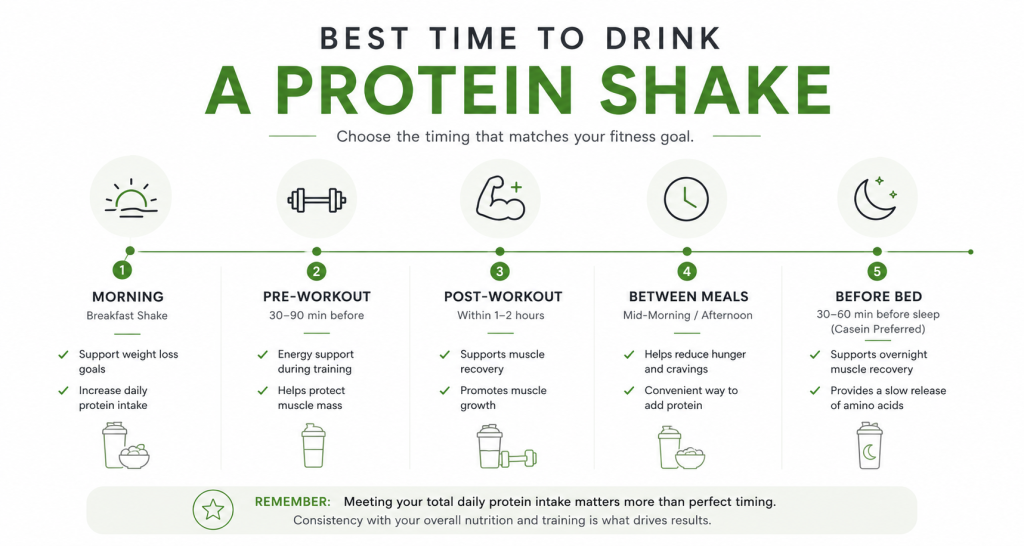
The best time to drink a protein shake depends on your goal. This infographic compares the ideal timing for muscle gain, recovery, weight loss, and meeting your daily protein intake.
Research over the past decade has consistently shown that while consuming protein around your workout can support muscle recovery and muscle protein synthesis, meeting your total daily protein intake has a much greater impact on long-term muscle growth and strength than drinking a shake at an exact time. Current evidence suggests that aiming for sufficient protein spread throughout the day is more important than chasing a narrow “anabolic window.”
In this guide, we’ll explain the best time to drink a protein shake based on your fitness goals, what the latest science says about protein timing, and how to maximize every serving. If you’re also wondering about serving size, check out ourHow Many Scoops of Protein Powder Should You Take? guide to make sure you’re getting the right amount for your body and goals. For readers who want to explore the scientific evidence in more detail, the International Society of Sports Nutrition (ISSN) Position Stand on Protein and Exercise provides one of the most comprehensive evidence-based reviews on protein intake, timing, and exercise performance.
Quick Answer: When Is the Best Time to Drink a Protein Shake?
If you’re looking for the short answer, here’s a quick guide.
Goal
Best Time
Muscle gain
Within 1–2 hours before or after training
Weight loss
At breakfast or between meals
Muscle recovery
Soon after exercise
General nutrition
Any time that helps you meet your daily protein needs
Overnight recovery
30–60 minutes before bed (preferably casein protein)
Remember, these recommendations work best when combined with a balanced diet rich in whole-food protein sources.
Does Protein Timing Really Matter?
This is one of the biggest myths in sports nutrition.
For years, fitness enthusiasts believed in something called the “anabolic window”—the idea that you had only 30 to 60 minutes after exercise to consume protein before missing your opportunity to build muscle.
Modern research paints a different picture.
A landmark review by Aragon AA and Schoenfeld BJ (2013) found that the post-workout “anabolic window” is much wider than previously believed, suggesting that consuming adequate protein throughout the day is more important for muscle growth than drinking a protein shake within a strict 30–60 minute window after exercise. Read the study here: (2)
While your muscles are indeed more responsive to nutrients after resistance exercise, the window for muscle recovery is much larger than previously thought. Instead of rushing to the nearest shaker bottle immediately after your workout, it’s more important to ensure you’re consuming enough high-quality protein throughout the day.
Most experts now recommend spreading your protein intake evenly across three to five meals rather than consuming the majority in one sitting. This approach provides your muscles with a steady supply of amino acids, the building blocks needed for repair and growth.
Best Time to Drink Protein Shakes for Muscle Gain
If your goal is increasing muscle size and strength, drinking a protein shake around your workout can be a convenient and effective strategy.
Resistance training creates tiny tears in muscle fibers. During recovery, your body repairs these fibers using amino acids from dietary protein, making them stronger and larger over time.
Because whey protein is rapidly digested and rich in leucine—an amino acid that stimulates muscle protein synthesis—it has become one of the most popular post-workout supplements.
However, don’t become obsessed with the clock.
Whether you drink your shake immediately after training or within the next couple of hours, you’ll likely experience similar benefits as long as you’re consistently meeting your daily protein requirements.
For many people, a post-workout shake is simply the easiest way to begin the recovery process.
Tips for muscle gain
Consume protein within about two hours of finishing your workout.
Aim for 20–40 grams of protein per serving.
Pair your shake with carbohydrates after intense training to replenish glycogen stores.
Continue eating protein-rich meals throughout the day.
Is It Better to Drink a Protein Shake Before or After a Workout?
The answer may surprise you.
Current evidence suggests that both options can be effective.
A protein shake before exercise ensures amino acids are already circulating in your bloodstream during training, helping reduce muscle protein breakdown.
A shake after exercise supports muscle repair and recovery once your workout is complete.
If you’ve eaten a protein-rich meal within the previous two to three hours, there’s usually no need to rush another shake immediately after training. On the other hand, if you’re exercising on an empty stomach, drinking protein shortly after your workout is a practical choice.
Ultimately, choose the option that best fits your schedule and helps you consistently meet your daily protein goals.
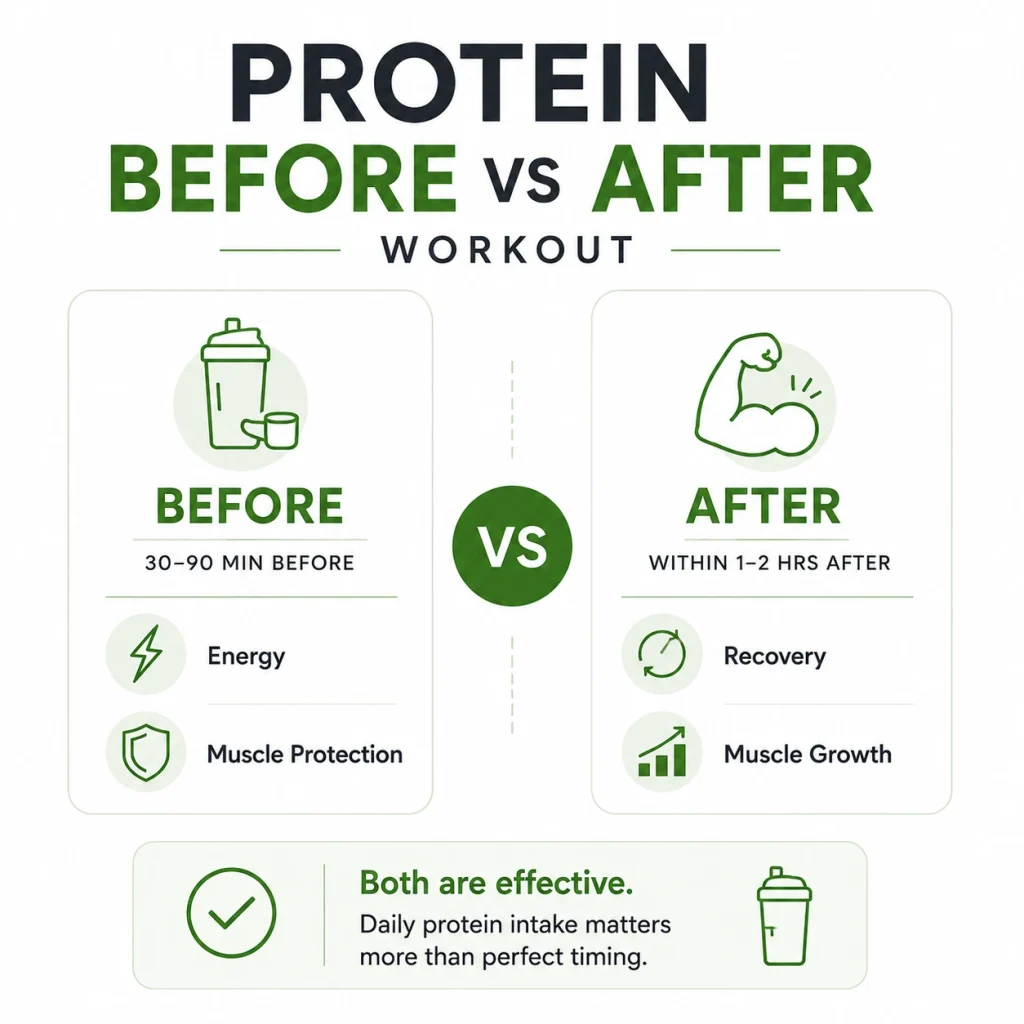
Compare the benefits of drinking a protein shake before versus after your workout to support muscle growth, recovery, and performance.
Is Drinking a Protein Shake in the Morning Good?
For many people, breakfast is the lowest-protein meal of the day.
Replacing a sugary breakfast with a protein-rich smoothie or shake can help increase satiety, stabilize energy levels, and make it easier to reach your daily protein target.
Morning protein is particularly beneficial if you:
Frequently skip breakfast.
Have a busy work schedule.
Are trying to lose weight.
Exercise early in the day.
Struggle to eat enough protein through whole foods alone.
Protein also slows digestion, helping you stay fuller for longer compared to high-carbohydrate breakfasts that may leave you feeling hungry an hour later. This is one reason why a protein-rich breakfast is often recommended for people trying to manage appetite and maintain steady energy throughout the morning. For even more satisfying meal ideas, explore our High-Protein Breakfast Ideas: 10 Healthy Options.
If your goal is weight management, pairing your protein shake with fruit, oats, or healthy fats can create a balanced breakfast that supports long-lasting energy while helping you meet your daily protein needs. The Harvard T.H. Chan School of Public Health’s Nutrition Source also emphasizes that adequate protein intake promotes satiety and plays an important role in maintaining muscle mass as part of a healthy diet.
Can You Drink Protein Shakes Between Meals?
Absolutely.
Protein shakes aren’t reserved for gym-goers. They’re also an excellent snack for busy professionals, students, parents, or anyone struggling to meet their daily protein needs.
Drinking a protein shake between meals may help:
Reduce hunger between meals.
Increase feelings of fullness.
Support healthy muscle maintenance.
Prevent overeating later in the day.
Increase overall protein intake without excessive calories.
That said, protein shakes should complement a balanced diet—not replace nutritious whole foods entirely.
If you’re regularly replacing meals with shakes, you may miss out on important nutrients such as fiber, healthy fats, vitamins, and minerals found in whole foods.
Is Drinking a Protein Shake Before a Workout Beneficial?
Yes, especially if you haven’t eaten for several hours.
A pre-workout protein shake supplies amino acids that remain available during your training session, helping reduce muscle protein breakdown.
Many people combine protein with carbohydrates before exercise for sustained energy.
A simple example includes:
Whey protein
Banana
Oats
Water or milk
If you’ve recently eaten a balanced meal containing protein, an additional shake before exercising may not be necessary.
Should You Drink Protein Before Bed?
Nighttime protein has become increasingly popular among athletes and older adults.
Research suggests that consuming 30–40 grams of casein protein before sleep can support overnight muscle protein synthesis because casein digests slowly, providing a steady release of amino acids.
This may be particularly beneficial if you’re:
Building muscle
Recovering from intense training
Trying to prevent muscle loss while aging
If you already consume enough protein during the day, bedtime protein becomes optional rather than essential.
If your goal is weight loss, timing can help manage hunger rather than directly increase fat burning.
Many people use protein shakes as:
A high-protein breakfast
An afternoon snack
A replacement for calorie-dense meals when appropriate
Protein increases satiety, meaning you stay fuller for longer and may naturally consume fewer calories throughout the day.
Combining protein with fiber-rich foods, fruits, and healthy fats generally provides better appetite control than drinking protein alone. If your primary goal is fat loss, choosing the right protein powder is just as important as when you drink it—our guide to Best Protein Powder for Weight Losscan help you find an option that aligns with your nutrition goals.
What If You Don’t Exercise?
One of the biggest misconceptions is that protein shakes are only useful for people who work out.
In reality, protein is essential for everyone.
You may benefit from a protein shake if you:
Struggle to meet your daily protein needs
Have a busy schedule
Are recovering from illness
Follow a vegetarian or vegan diet
Are an older adult aiming to preserve muscle mass
In these situations, the best time is simply whenever it helps you consistently reach your daily protein target.
Does the Type of Protein Matter?
Different protein powders digest at different rates.
Whey protein is rapidly absorbed, making it a popular post-workout choice.
Casein protein digests slowly and is commonly used before bed.
Plant-based proteins such as pea, soy, and rice blends can also effectively support muscle growth when consumed in adequate amounts.
The best protein is ultimately one that fits your dietary preferences, budget, and nutritional needs. If you’re deciding between different types of whey, our guide to Whey Protein Isolate vs Concentrate explains the key differences in protein content, digestion, and performance benefits. If you avoid dairy, you can also explore our recommendations for the Best Dairy-Free Protein Drinks to find high-quality plant-based alternatives.owder
Common Mistakes When Timing Protein Shakes
Many people focus so much on timing that they overlook more important factors.
Avoid these common mistakes:
Prioritizing timing over total daily protein intake.
Skipping whole-food protein sources entirely.
Drinking protein shakes that are loaded with added sugars.
Assuming more protein automatically leads to more muscle.
Forgetting to spread protein intake across multiple meals throughout the day.
Consistency matters far more than perfection.
The Bottom Line
So, when is the best time to drink a protein shake?
For most people, there isn’t a single perfect time.
If you’re trying to build muscle, drinking a protein shake within a few hours after resistance training is a convenient option. If weight loss is your goal, using a protein shake to increase fullness between meals may be more beneficial. Older adults and serious athletes may also gain additional recovery benefits from consuming protein before bed.
Ultimately, the biggest predictor of success isn’t whether you drink your shake at exactly the right time—it’s whether you consistently consume enough high-quality protein each day.
By combining adequate protein intake with regular exercise, sufficient sleep, and a balanced diet, you’ll get far better results than focusing on timing alone.





Pingback: Protein Shake Before or After Workout? (2026) - Nutra Insight
Pingback: The Foundation of Protein Nutrition: The Complete Guide (2026) - Nutra Insight